Saturday, 31 December 2016


Self-Portrait, Vanessa Bell, c1915
I didn't go to many exhibitions this year but already 2017 is looking very promising. First up, there's Vanessa Bell ...

The lady with the umbrella, John Singer Sargent, 1911                                
Then Sargent's watercolours ...

Followed directly by the first UK retrospective of Tove Jansson. All three at Dulwich Picture Gallery before the end of the year. Happy New Year everybody.
Mysterious Landscape, Tove Jansson, c1930

Friday, 30 December 2016


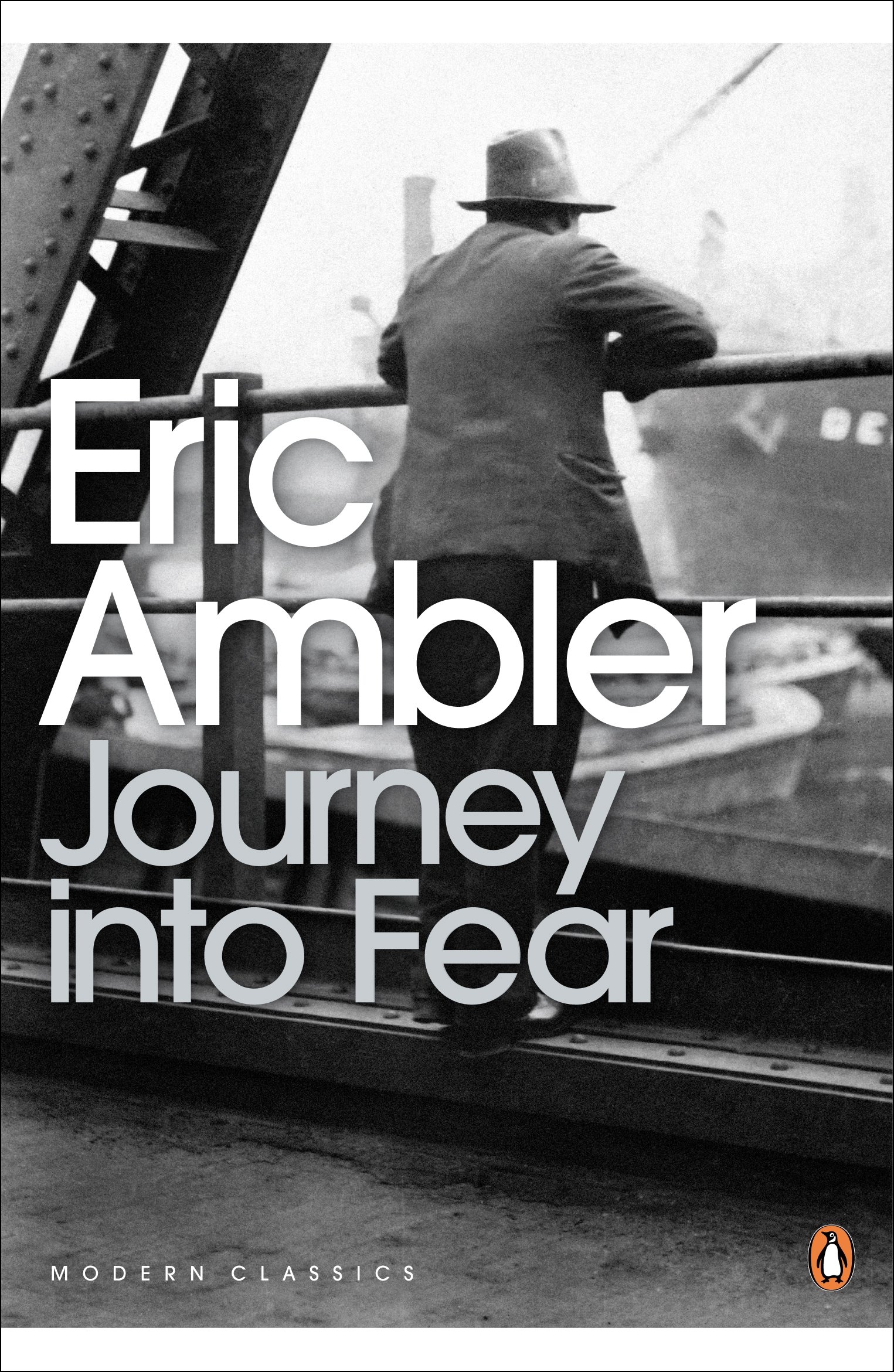
I enjoyed Andrew Marr's series Paperback Heroes a couple of months ago - especially the episode on spy fiction - and scribbled down several titles to be read later. So this was my not-very-Christmassy Christmas reading and a jolly good read it was, taken with a whiskey sour. (Give me the classic cocktails, not the fancy ones!) I even got to watch the 1943 film, seemingly made with a great deal of involvement, but not actually directed by Orson Welles. The film stayed fairly true to the book, until the ending went way over the top. I've never read Eric Ambler before but I'll definitely seek out some more.


Right now I'm belting through The Secrets of Wishtide, a thoroughly enjoyable Victorian murder mystery introducing lady detective Mrs Laetitia Rodd. To be honest, it's also thoroughly derivative and owes much to Steerforth and little Em'ly as well as the original female detective Mrs Gladden. But it's a nice easy read and a good excuse for not even thinking about venturing out into icy fog.

Saturday, 24 December 2016


6pm:  I admit, the prospect of venturing out into the cold night air and drizzle - and frizzing my Christmas hairdo - was distinctly unappealing. So whose bright idea was it to book a last pre-Christmas night out?
But I'm so glad I went. Because the RSC's country house production of Love's Labour's Lost - set in the summer of 1914 - was a complete delight and I'm sure Shakespeare would love it.  It's a bit Brideshead (well, there's a very Aloysius-y teddy bear), a bit Downton Abbey, lots of laughs - and yet poignant at the end when the men go off, not to test their true love but to fight WW1. The lovely set is based on Charlecote Park. Now I really want to see the companion piece Much Ado, which has had even better reviews and is set when they return from the trenches. There's a trailer here. The most enjoyable Shakespeare that I've seen in years.

WHEN icicles hang by the wall,
  And Dick the shepherd blows his nail,
And Tom bears logs into the hall,
  And milk comes frozen home in pail,
When blood is nipped, and ways be foul,        
Then nightly sings the staring owl,
            To-whoo;
To-whit, to-whoo, a merry note,
While greasy Joan doth keel the pot.


Actually, the quotation I like best is this one:
 He hath not fed of the dainties that are bred in a book;
he hath not eat paper, as it were; he hath not drunk ink.

Thursday, 22 December 2016


You know when you read a review and think, 'I've simply got to read this book'? From the start, I was engrossed ... and then somehow it all went wrong, and dragged on too slowly, and I slightly lost interest. I kept reading, waiting for a twist/revelation that wasn't coming. What a shame, because there's so much to love in this - what should I call it? - historical why-dunnit? I was intrigued from the start by the similarity between the author's name and the protagonist. (but that's just a bit of tricksiness.) There is a wonderful sense of location - historical and geographical - in the Scottish highlands where life seems nasty. brutish and short, in thrall to the laird and his pecking order of representatives, the factor and the thuggish local constable. It is 1869. A crofter's 17yo son commits a bloody triple murder and doesn't attempt to deny it. The novel comprises a prison memoir written at the behest of his lawyer who is trying to plead insanity, followed by other documents: medical opinion, witness statements, newspaper reports of the trial. But I did find myself wishing that we could move along a bit faster. And I didn't quite believe that the doltish boy would really have written the articulate, sensitive memoir.

Wednesday, 21 December 2016


No snow today at Fenton House but I loved my immersive visit to this silk merchant's house: upstairs and downstairs with my wee-willie-winkie candlestick (electric candle, not a real one!) - peeping through the keyhole at the daughter's opium habit - oh, no, she's seen me! - sucking on a sticky sweetmeat from the stillroom - sitting at the master's desk reading his letters. Touching is allowed ... Run your hands over a black silk mourning dress and you'll illuminate the richly-embroidered underclothes beneath. Then take a seat at the long dining table -  at every place setting, there's a clear box containing a napkin ... lift it out and you'll catch the aroma of each different course: leek soup, buttered asparagus, pork and chestnuts, lobster, tea and biscuits and port. This immensely clever and creative installation isn't quite as dramatic as Dennis Severs' house, but it's well worth a visit and it's only on for a few more days. (And it's free if you're a National Trust member.) This afternoon there were only about half a dozen people in the whole house. You can read more about it here. 

Sunday, 18 December 2016


I braved Black Eye Friday - and yes, it was horrible, even at 5pm when they'd only been drinking all afternoon. (It's unnerving standing on an escalator behind a very, very large lady who's literally rolling drunk.) But it was worth it, because I was on my way to see two queens going head to head in an electrifying performance of Mary Stuart.
I tried to book tickets months ago, but it was sold out - then by chance I realised that some cheap tickets were released a few days ago. Thrilled? £10 to see Juliet Stevenson and Lia Williams ...
The production starts each night with the spin of a coin, to determine which actress plays Elizabeth and who plays Mary ... it came up tails. Juliet Stevenson as Elizabeth, Williams as Mary.
Oh, it was riveting - and the toss of the coin really pointed up the fragility of Elizabeth's claim to the throne and how easily it could have fallen the other way. As for the dodgy courtiers, wriggling out of responsibility ...
Elizabeth's crown seems as lonely as Mary's prison.
Now, of course, I'm aching to see it again, the other way round. There's a review here.

Joan Plowright was just ahead of me in the ticket queue - so beautifully dressed! I thought how wonderful to be still going to the theatre quite alone at her grand age. Though I hope she got home all right. It was not pretty out on the streets ...

Friday, 16 December 2016

Roses in Gold Vase, Ethel Susan Graham Bristowe, 1930s

Well, here as promised are my books of the year but it's going to be a quick whizz through as the nice long post I wrote this afternoon has mysteriously vanished into thin air.

I was thinking that this was a 4* year for reading, rather than 5* but when I looked through my reading list there are lots of books that I've enjoyed. Rather to my surprise, I found that I've read a few more titles than last year - possibly because I haven't blogged so much?

So let's start with one that was actually published in 2016. I loved Trio - by Sue Gee - and if it hasn't been selected for any of those newspaper book of the year lists, then it jolly well should have been.

But let's hurry on to Mrs Miniver's Rose Bowl Award for vintage fiction, as these are the books I really love reading. It's a tie between EH Young - a previous winner - for Celia, one of the best novels that I've ever read about disappointment in marriage, and Diana Tutton for Guard Your Daughters. I see that my first thought about Guard Your Daughters was, 'Why isn't this a Persephone book?' Well, it seems that they were already on the case and it's going to be republished as a Persephone title next autumn. A shout out to Persephone also for the book I most enjoyed re-reading for the umpteenth time: no matter how many times I return to it, Someone at a Distance remains my favourite Dorothy Whipple.

Perhaps not quite a contender for the rose bowl but I really enjoyed Hans Fallada's 1932 best-seller Little Man, What Now?

Now on to the Big Fat Book award for the book that I couldn't put down. And that goes to Conclave, by Robert Harris (also a previous winner for his gripping novel about the Dreyfus affair, An Officer and a Spy). This got a very sniffy response when I suggested it to ladies in my book group; you'd think I'd mooted Dan Brown! Since when did we get so stuck-up about books that are a gripping read, especially when they're as well-written and researched as this one? Conclave is on my Christmas list for men who are difficult to buy for.

I'm counting Allan Massie's Death in Bordeaux as another Big Fat Read as I went on to read my way through the whole quartet.

I don't set out to read a balance of fiction and non-fiction; it seems naturally to work out as 2:1. I didn't have to think twice about selecting my non-fiction book of the year because it's Helen Rappaport's Caught in the Revolution. History writing at its very best.

I was competely engrossed by Rappaport's book - as much as by any novel - and also by A Notable Woman, the Romantic Journals of Jean Lucey Pratt , edited by Simon Garfield. Jean Lucey Pratt wins my special award for the biographical subject I dearly longed to pick up and shake. Yes, I know I said this about Elizabeth Jane Howard, too - but Jean Lucey P was in a class of her own. Mrs Miniver's Throttle award for exasperating women? (That's not to say it couldn't equally be awarded to a man on another occasion!) I read both books in fascinated horror.

Finally, two big, beautiful art books that landed on my desk for work. Even though I've no great interest in things botanical, I found myself utterly absorbed in Plant for its stunning illustrations. I thought that this vast monograph on the Irish stained glass artist Wilhelmina Geddes might be too niche for me, but it turned out to be a fascinating and poignant account of a lonely and difficult woman, struggling to forge a career in the traditionally male world of stained glass. Now almost forgotten, she was described on her death in 1955 as 'the greatest stained glass artist of our time,' but much of her  energy was expended just in keeping body and soul together. Bizarrely, she is one of ten outstanding artists - Picasso another - to have a crater on the planet Mercury named after them.

And that's that: a year's reading whittled down to the highlights! Wishing everybody a happy year of books in 2017.